
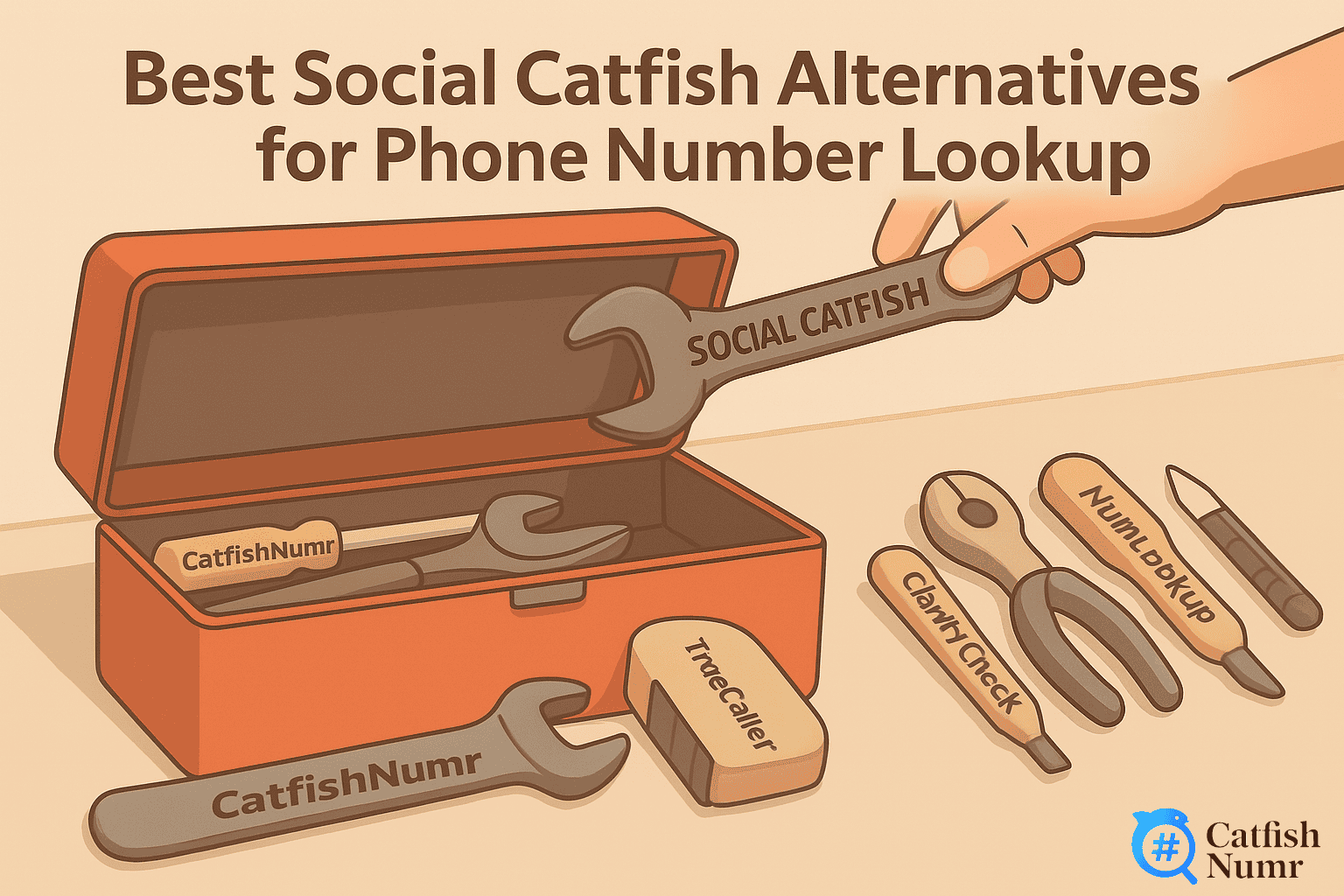
If your main goal is verifying who’s behind a phone number before you meet, send money, or keep texting, these are the strongest alternatives to Social Catfish for phone-based checks.
| Tool | Best For | Geography | Free Option | Depth Level | Ideal Use Case |
|---|---|---|---|---|---|
| CatfishNumr | Dating-focused verification | US + broader positioning | Limited / credit-based | Focused | Verify a dating match |
| Truecaller | Spam + global caller ID | Global | Yes (core) | Moderate | Identify unknown caller |
| NumLookup | Free US first pass | US | Yes | Basic | Quick name check |
| Whitepages | Directory + spam | US | Limited | Moderate–Deep | US number research |
| Spy Dialer | Free quick signal | US | Yes | Basic | Fast free check |
Why People Look for a Social Catfish Alternative
Most people don’t search for an alternative unless something went wrong.
Usually, it’s one of these situations:
- You ran a number and hit a paywall
- You saw “results found” but couldn’t preview anything meaningful
- You signed up for a trial and didn’t realize it renews
- You needed quick clarity — not a 40-page background-style report
Social Catfish works as a public-record aggregator. But dating verification is more specific than general people search.
Here’s what consistently triggers frustration in this industry:
- “Scan in progress” screens that build suspense
- Teasing that something was found
- Full access is locked behind a subscription
- Trial auto-renewal users didn’t fully expect
It’s not unique to one company — it’s common in people-search platforms.
1. CatfishNumr (Best for Dating-Focused Phone Verification)
Best for: Fast phone-number-first verification built specifically for dating safety and scam detection.
CatfishNumr is designed around one core action: paste a number → get safety signals. It doesn’t try to act like a full background check platform. It focuses on what daters actually need.
Why does it connect with dating users
- Line-type detection positioning (mobile, landline, VoIP) — helpful for spotting burner-style numbers.
- Framed around scam and catfish risk instead of long public-record reports.
- Minimal friction workflow compared to traditional “people search” flows.
- Built for quick verification before meeting or sending money.
Important to know
- Like all reverse phone tools, results depend on public and third-party data.
- Mobile and VoIP numbers are structurally harder to trace.
- It provides signals — not guaranteed identity confirmation.
Who it’s ideal for:
Someone who just got a number from Tinder, Bumble, Hinge, and wants clarity fast.
2. Truecaller (Best for Global Caller ID & Spam Detection)
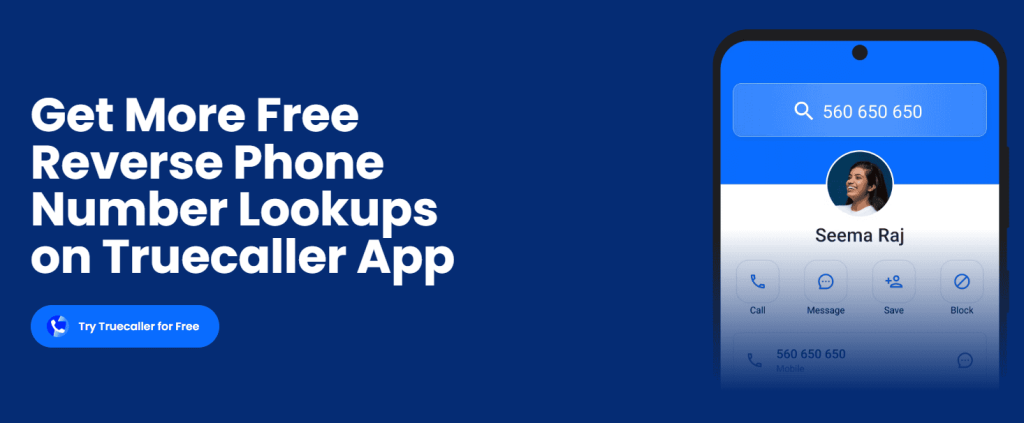
Best for: Identifying unknown callers internationally with community-based spam labeling.
Truecaller works differently from traditional people-search services. It’s built as a caller ID ecosystem with a massive global dataset.
Why it stands out
- Strong international coverage compared to US-only directories.
- Shows spam reports and community flags.
- Often free for basic lookup.
- Real-time caller ID use case (not just static reports).
Limitations
- Requires sign-in to view detailed results.
- Community-labeled names can be inaccurate or outdated.
- Privacy tradeoffs exist in caller ID ecosystems.
Who it’s ideal for:
Users outside the US or those primarily worried about spam/scam call patterns rather than deep identity reports.
3. NumLookup (Best Free US Phone Lookup First Pass)
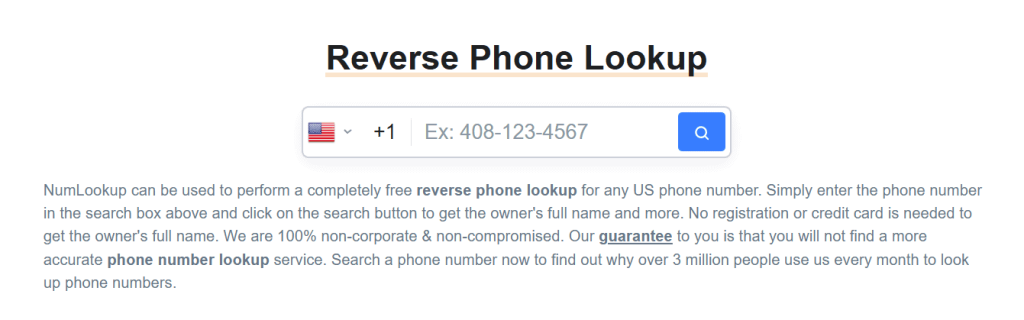
Best for: Quick, no-card-required US reverse phone lookups.
NumLookup is often used as a “first pass” before paying for anything else.
Why users like it
- Advertises free US phone lookups.
- No immediate subscription barrier for core name results.
- Simple interface.
Limitations
- Primarily US-focused.
- Limited depth for mobile or VoIP.
- Data can be outdated or incomplete.
Who it’s ideal for:
US-based users who want to check if a number connects to a basic name/location before considering paid tools.
4. Whitepages (Best Known Directory Brand in the US)
Best for: US directory-style reverse phone lookups with optional deeper reports.
Whitepages is one of the most recognized names in directory lookups.
Why it’s relevant
- Reverse phone lookup plus spam context.
- App-based experience available.
- Familiar directory structure many users trust.
Limitations
- Strongly US-focused.
- Paywalls appear quickly for full reports.
- Mixed review patterns around billing and data accuracy.
Who it’s ideal for:
Users who prefer established directory brands and are comfortable navigating subscription tiers.
5. Spy Dialer (Best Completely Free Quick Check)

Best for: Zero-checkout, quick signal checks for US numbers.
Spy Dialer markets itself as a free reverse lookup tool without requiring membership.
Why it appeals to alternative seekers
- No credit card required.
- Immediate results for many US numbers.
- Often referenced in scam-awareness forums.
Limitations
- Accuracy complaints are common.
- US-only.
- Should never be treated as proof — only as a lead.
Who it’s ideal for:
Users who understand it’s a quick “signal check,” not a definitive identity verification tool.
This industry runs heavily on subscription models.
You’ll often see “$1–$7 trials.”
How “$1–$7 Trials” Can Become $30–$70 Renewals
The common structure:
- Low-cost trial (few days)
- Automatic renewal into monthly plan
- Monthly pricing typically between $30–$70
This is not hidden, but many users don’t read the renewal terms closely.
Always check:
- Trial duration
- Renewal price
- Exact cancellation path
Before entering payment details, confirm:
- Is this a one-time payment or subscription?
- When exactly does renewal trigger?
- Where is the cancellation link located?
- Is there a refund policy page?
- Do they state data limitations clearly?
If cancellation requires emailing support instead of a dashboard button, note that.
Leave a Reply