
OSINT Industries is an identity intelligence tool that pulls data from multiple sources and builds structured data reports.
It uses emails, usernames, and phone numbers for investigations, linking activity across platforms. Pricing starts at about $25, with higher plans ($65 and $131) offering more searches, API access, and extra features.
It works well for deep analysis, but it can be “too much” for quick lookups. That’s where the 6 alternatives below come in – they’re faster and more accurate:
| Tool | Best Feature | Best Used For | Pricing |
| CatfishNumr | Risk signals + Scammer & VoIP detection | Quick scam checks, phone/email/image verification | $5.95 / $9.95 |
| Epieos | Fast email/phone/username exposure | Fast identity validation & email checks | Free / $35 /Custom |
| SpiderFoot | Automated scans across 200+ sources | Technical scanning & infrastructure mapping | Free / $79 / $249 / $899 |
| Maltego | Interactive relationship graphing | Deep searches & connection mapping | Free / $3,492 – $8,730 / Custom |
| Lampyre | Strong CIS/Eastern Europe data + visual graphs | Regional investigations & relationship mapping | $5 / $8–$232 /$535 – $1,615 |
| UserSearch | Niche platform coverage (600+ sites) | Social footprint discovery & username tracing | Free / $18.97 – $37.94 |
1. CatfishNumr: Quick Scam Detection & Risk Checks
CatfishNumr is a fast lookup tool built around risk checks, designed to quickly reveal whether a number is real, linked to catfishing, or tied to existing profiles.
It’s commonly used to verify dating matches, screen unknown callers, detect VoIP/disposable numbers, and check reused emails or images across platforms.
Enter a phone number, email, or image, and CatfishNumr will scan signals like carrier info, spam reports, and public profiles to give you clear, in-depth results.
Pricing is simple and flexible:
- $5.95 ➡️ 2 lookups
- $9.95 ➡️ 5 lookups
Both CatfishNumr and OSINT Industries do reverse lookups, but CatfishNumr is faster and clearer for quick, real-world decisions. OSINT Industries focuses on depth, automation, and case-building.
2. Epieos: Instant Email Checks & Profile Matching
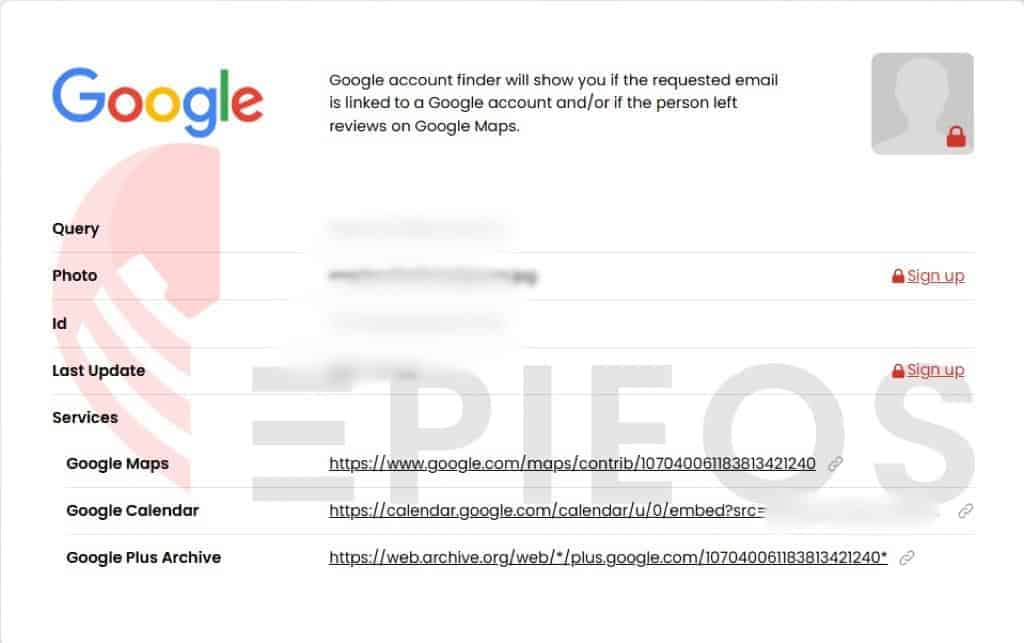
Epieos is a free lookup tool for emails, phone numbers, and usernames – popular with investigators, journalists, and fraud analysts.
Enter an email in and instantly see if it’s registered across Google, Microsoft, Skype, Socials, Spotify, and more – with profile pictures, names, and breach flags.
While phone lookups are solid (especially for international numbers), email searches are Epieos’s strong point because they’re supported by a clean, icon-based interface.
Pricing:
- Free tier (limited access)
- $35/month: 30 full-access requests
- Custom enterprise plans (API access)
Use it as a “mandatory first stop” before paid tools because it’s quick and precise. Compared to OSINT Industries, Epieos is significantly faster, free, and purely surface-level public intel.
Epieos Cons: Watch out for occasional false negatives, Cloudflare CAPTCHA during heavy use, and weaker account detection.
3. SpiderFoot: Deep Infrastructure Mapping & Breach Detection
SpiderFoot is open-source OSINT for investigating systems and networks – it’s popular with security teams and technical investigators.
SpiderFoot is used to look up emails, domains, IP addresses, phone numbers, usernames, Bitcoin addresses, and company names, but it’s the strongest with technical entities, like domains and IPs.
It queries 200+ sources (DNS, WHOIS, Shodan, HaveIBeenPwned, Certificate Transparency, dark web APIs, etc.) and puts results into visual relationship graphs.
SpiderFoot automatically finds related systems, breaches, and connections without manual work.
You can run it privately or schedule scans with alerts, but results take from minutes to hours. SpiderFoot’s prices vary:
- Free
- Freelancer: $79/month
- Business: $249/month
- Enterprise: $899/month
*Paid API access available
SpiderFoot is a top free OSINT tool because of its automation and data linking, but users complain about messy results, useless data, and broken modules.
SpiderFoot is slower and more complex but far stronger for deep infrastructure analysis, while OSINT Industries is better for quicker identity checks.
4. Maltego: Map Connections Across People, Domains & Assets

Maltego is a data mining platform designed for mapping complex relationships through interactive graphs.
Law enforcement, corporate security teams, and fraud investigators use it to visualize connections between emails, phone numbers, domains, companies, social media accounts, and Bitcoin addresses.
Its transform system searches 100+ sources in one click, connecting entities across public records, breach databases, and premium providers for free or paid.
- Basic: Free
- Entry: $3.5k annually
- Professional: $8.7k annually per seat
- Enterprise: Custom
Prices are converted from EUR to USD and may vary over time.
Maltego is good for relationship mapping and visual analysis, but with caveats: high cost, difficulty using it, a weak free plan, and an outdated, heavy desktop app.
Unlike OSINT Industries, which returns simpler results in seconds, Maltego requires hours and significant investment. It’s great for investigations where visualizing connections matters more than speed.
5. Lampyre: Affordable Visual Analysis with CIS Coverage
Lampyre is a paid OSINT platform that combines identity lookups with visual link analysis. It’s a more affordable Maltego alternative.
Investigators and fraud analysts use it to query phone numbers, emails, names, social handles, domains, and company records across 80+ sources.
Lampyre is valuable for cases involving Russian or Eastern European targets because it covers Eastern Europe.
It searches and finds results on VK, Telegram, and CIS, which Western tools miss entirely. It makes connections through relationship graphs and report exports.
- Trial: $5 (one month)
- Monthly: $8 – $232
- Annually: $535 – $1,615
Users note that Lampyre has weaker US/UK coverage and Windows-only access. Its interface may look dated, too. For Western lookups, OSINT Industries is faster and more complete.
6. Usersearch: Uncover Hidden Social Media Accounts
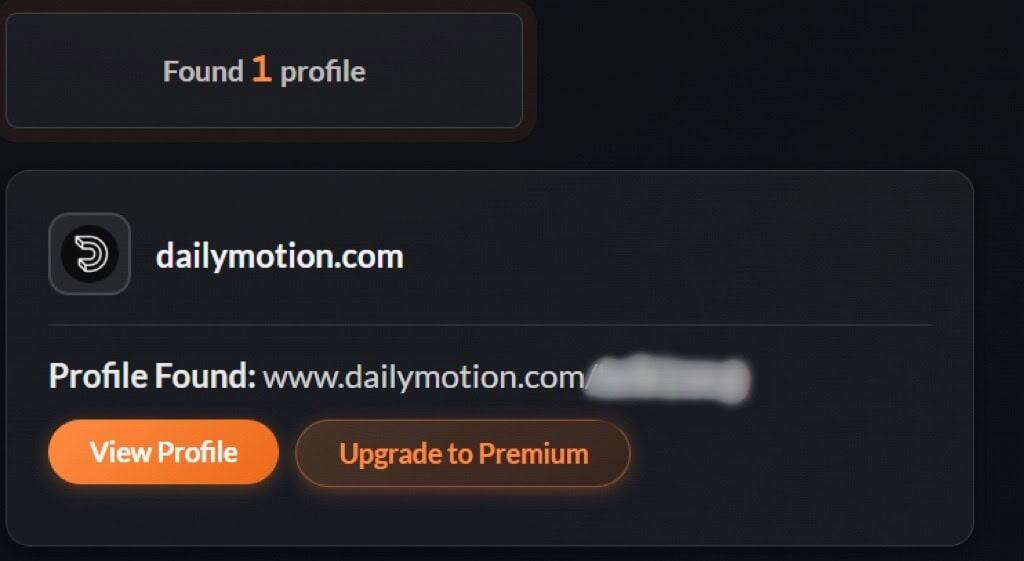
UserSearch is a lookup platform that finds social media profiles and online accounts tied to a username, email, phone number, and other data.
Its user base mainly consists of investigators, HR teams, or simply curious individuals who want to run background checks and fraud cases.
It scans 600+ platforms: OnlyFans, Patreon, and dating platforms, after which UserSearch generates reports with accounts, profile pictures, and breach data.
The free version of the tool offers previews only. The Monthly subscription costs $18.97, whereas the Team plan costs $37.94.
UserSearch stands out for covering niche forums and sites most tools miss, with fast, easy-to-read results.
UserSearch’s limitation is the scope, outdated links, and limited phone search capabilities. Also, there are no addresses, relatives, or offline records.
Compared to OSINT Industries, UserSearch is faster for social media mapping, whereas OSINT Industries provides deeper real-world identity data.
What to Do When Multiple Matches Show Up?
The key is knowing how to read the results. Multiple matches during online investigations are common – especially with popular names, recycled numbers, or generic usernames.
🤔 Assess data consistency.
Inconsistency in digital footprint shows up as the same piece of info (name, number, etc.) being used by different people, which is a sign the person is fake.
📍 Check the locations.
For instance, if the same email is linked to different accounts, that’s a strong sign the accounts belong to the owner.
🧩 Combine details.
Combine a number, email, and username during your search if you have them because using more data increases accuracy in background checks.
🚩 Check red flags early.
VoIP numbers, disposable emails, or reused images are typically used by catfishes, so use an OSINT Industries alternative that detects them, like CatfishNumr.
When something still feels unclear, slow down and double-check. A quick review is usually enough to avoid chasing the wrong lead.
Leave a Reply